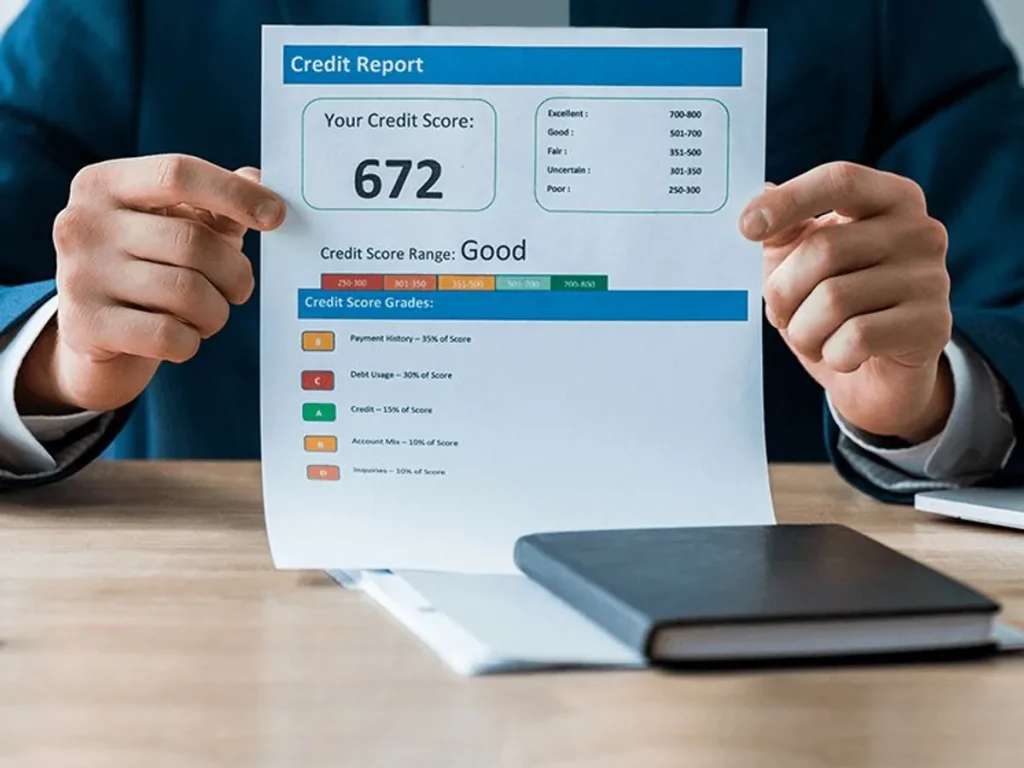
Business Credit Report, A-I-R-S Number, American Ratings, Business Loans, Business Credibility, Creditworthiness, SME Financing, Corporate Trust, Financial Transparency, Global Business Standards
In today’s capital-constrained and data-driven business environment, credibility is currency. Lenders, investors, partners, and even large customers increasingly rely on structured, third-party signals to assess whether a business is trustworthy, stable, and worth engaging with. Traditional financial statements still matter, but they are no longer sufficient on their own. What decision-makers want is an independent, standardized, and comparable view of a company’s financial behavior and risk profile. This is where a Business Credit Report, enhanced with the American Business A-I-R-S Number Certificate issued by American Ratings, becomes a powerful add-on.
At its core, the A-I-R-S framework is designed to bridge a persistent credibility gap faced by small and medium enterprises, startups, and even mid-sized companies expanding into new markets. Many businesses struggle not because they lack potential, but because they lack a recognized and portable proof of financial reliability. The American Business A-I-R-S Number Certificate aims to solve this problem by providing a structured identity and rating signal that can be used across lending, procurement, and partnership decisions.
The credibility problem in business lending
Business loans are fundamentally about risk assessment. Banks and alternative lenders ask a simple question: what is the probability that this borrower will repay on time and in full? Unfortunately, many businesses—especially young companies, service-based firms, and international entities—do not fit neatly into traditional credit scoring models. They may have limited borrowing history, fragmented financial records, or operate across jurisdictions where data is inconsistent.
As a result, viable businesses often face higher interest rates, excessive collateral requirements, or outright rejection. From the lender’s perspective, this caution is rational. From the entrepreneur’s perspective, it is a bottleneck to growth. A standardized Business Credit Report backed by an independent rating system helps align both sides by reducing information asymmetry.
What is the American Business A-I-R-S Number Certificate?
The American Business A-I-R-S Number Certificate is a unique business identification and rating credential issued under the American Ratings framework. Think of it as a structured financial identity for a business, comparable in spirit to how personal credit scores function for individuals, but designed for enterprises with far more complexity.
The A-I-R-S number links a business to a verified profile that reflects its operational presence, financial behavior, compliance posture, and risk indicators. When attached to a Business Credit Report, it acts as a quick-reference signal for lenders and partners who want an at-a-glance assessment before diving into detailed financials.
The critical distinction here is independence. Unlike self-reported claims or marketing material, an A-I-R-S Number Certificate is positioned as an external validation. That independence is precisely what gives it weight in loan evaluations and credibility checks.
Business Credit Reports: more than just numbers
A Business Credit Report is often misunderstood as a static document listing balances, liabilities, and payment history. In reality, a well-structured report is a narrative about how a company behaves financially over time. It answers questions such as: Does the business pay suppliers on schedule? Does it manage leverage responsibly? Is its growth funded sustainably or through excessive short-term borrowing?
When enhanced with the A-I-R-S Number Certificate, the report gains an additional layer of interpretability. Instead of forcing lenders to manually compare raw data across applicants, the A-I-R-S framework introduces a standardized rating lens. This reduces friction in underwriting and accelerates decision-making.
For businesses, this means fewer repetitive explanations and a clearer way to communicate financial discipline. For lenders, it means lower due diligence costs and more consistent risk assessment.
Why American Ratings matters
Ratings only work if the issuing body is perceived as credible, methodical, and consistent. American Ratings positions itself as a provider of standardized business assessments aligned with global expectations of transparency and rigor. The value of the A-I-R-S Number Certificate is inseparable from the reputation of the framework behind it.
From a practical standpoint, this matters because lenders are conservative institutions. They are unlikely to trust proprietary or obscure scoring systems. A rating anchored in an American-style framework, familiar to international finance and trade ecosystems, carries psychological and institutional weight. It signals that the business is willing to be evaluated under recognized standards rather than hiding behind opacity.
Impact on business loans and financing access
The most immediate benefit of adding an A-I-R-S Number Certificate to a Business Credit Report is improved access to financing. This does not automatically guarantee loan approval, but it materially improves the quality of the conversation with lenders.
First, it can reduce perceived risk. Even if a business is young, a structured rating based on available data helps lenders distinguish between “unknown” and “high risk.” Second, it can speed up approvals by giving credit committees a familiar reference point. Third, in competitive lending environments, it can translate into better terms—lower interest rates, longer tenures, or reduced collateral requirements.
For alternative lenders and fintech platforms, the A-I-R-S framework is particularly useful. These institutions rely heavily on data-driven underwriting and benefit from standardized inputs that can be integrated into automated decision models.
Beyond loans: credibility with partners and clients
While financing is a major use case, the credibility benefits of an A-I-R-S Number Certificate extend well beyond loans. Large enterprises increasingly conduct due diligence on suppliers, vendors, and partners to manage operational and reputational risk. A Business Credit Report backed by a recognized rating can significantly shorten onboarding cycles.
In cross-border trade, credibility becomes even more critical. A company entering a new market often lacks local references. An American Business A-I-R-S Number provides a portable signal of reliability that can be understood across jurisdictions. This can influence contract negotiations, advance payment terms, and long-term partnerships.
A tool for internal discipline
An often overlooked benefit of formal credit reporting and ratings is internal. When a business knows it is being evaluated against objective criteria, it tends to adopt better financial discipline. Timely payments, cleaner bookkeeping, and prudent leverage are no longer abstract best practices; they directly influence the company’s external perception.
In this sense, the A-I-R-S Number Certificate is not just a badge to show outsiders. It becomes a management tool that encourages healthier financial behavior. Over time, this feedback loop can materially improve a company’s resilience and valuation.
Strategic positioning for growth-oriented businesses
For startups and growth-stage companies, timing matters. Establishing a credible financial identity early can pay dividends later. Many founders wait until they urgently need capital before thinking about creditworthiness. By then, the window for preparation is narrow.
Adding an A-I-R-S Number Certificate proactively allows businesses to build a track record before major funding events. When the time comes to seek loans, strategic partnerships, or even acquisition discussions, the groundwork is already in place.
A critical perspective
It is important to be clear-eyed. No certificate or rating replaces sound fundamentals. Weak cash flows, unsustainable models, or poor governance cannot be magically fixed by an A-I-R-S number. At best, the framework amplifies reality. That is precisely why it works: it rewards disciplined businesses and exposes fragility early.
Businesses should therefore approach the A-I-R-S Number Certificate not as a cosmetic add-on, but as part of a broader commitment to transparency and financial maturity.
Conclusion
In an era where trust is quantified and decisions are increasingly automated, the combination of a Business Credit Report and the American Business A-I-R-S Number Certificate by American Ratings represents a strategic advantage. It addresses a fundamental challenge in business finance: how to communicate credibility efficiently and credibly.
For lenders, it reduces uncertainty. For partners, it builds confidence. For businesses themselves, it creates a structured path toward better financing outcomes and long-term reputation. As global commerce becomes more interconnected and data-driven, such standardized credibility signals are not optional extras; they are becoming core infrastructure for serious businesses aiming to grow with stability and trust.
Leave a Reply