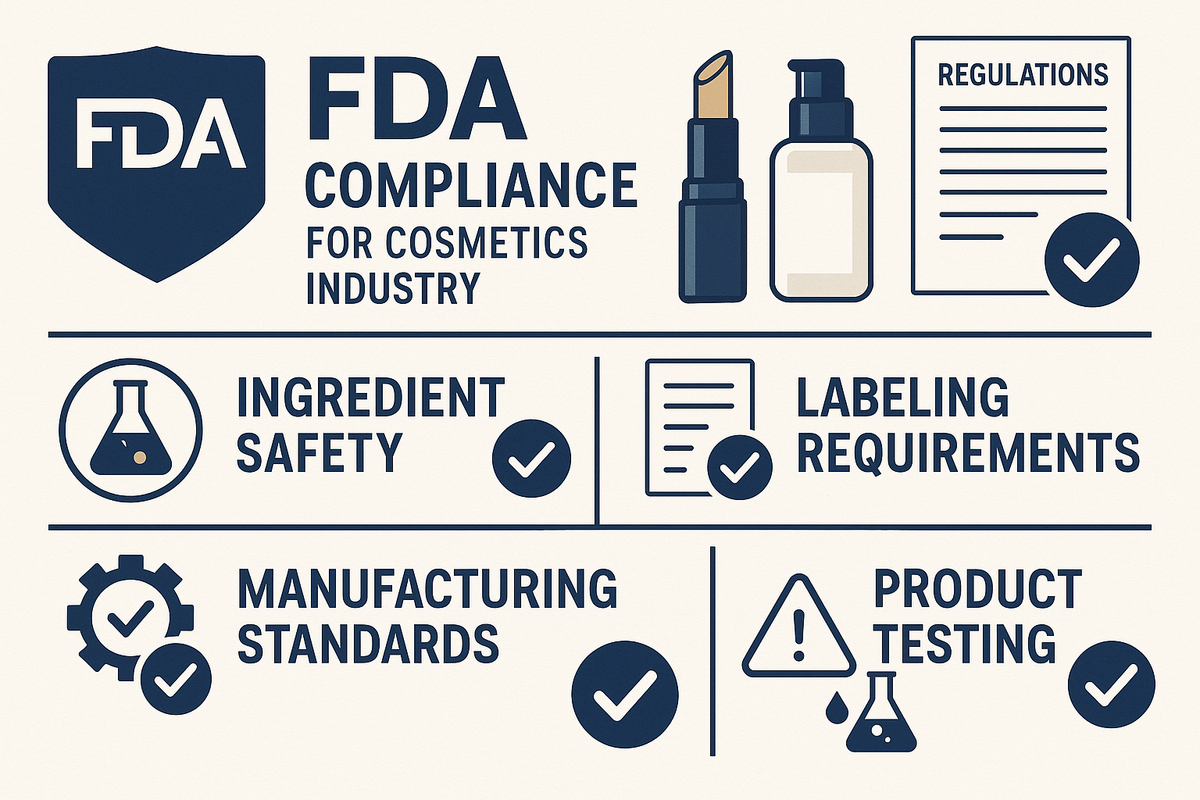
The regulatory expectations for cosmetic manufacturing in the United States have changed dramatically with the passage of the Modernization of Cosmetics Regulation Act (MoCRA). One of the most important outcomes of MoCRA is the clear movement toward mandatory Cosmetic Good Manufacturing Practices (GMP) under the authority of the US FDA.
While cosmetic GMP was historically treated as guidance-based, MoCRA establishes a framework that makes GMP compliance an enforceable requirement. Cosmetic companies must now implement structured quality systems, maintain manufacturing controls, and be prepared for US FDA inspections.
XPRO America is a professional US FDA Consultancy helping cosmetic manufacturers, brand owners, and contract facilities implement GMP systems aligned with MoCRA and US FDA expectations.
What “Mandatory Cosmetic GMP” Means Under US FDA
Mandatory cosmetic GMP means that cosmetic products must be manufactured under conditions that:
- Prevent contamination
- Ensure consistent quality
- Protect product integrity
- Support traceability
MoCRA authorizes the US FDA to establish and enforce GMP requirements for cosmetic facilities. This shifts GMP from best practice to regulatory obligation.
Failure to follow GMP may cause a cosmetic to be considered adulterated, making it illegal to distribute in the United States.
Why US FDA Is Strengthening GMP Enforcement
MoCRA was enacted to improve consumer safety and modernize cosmetic regulation.
Mandatory GMP supports:
- Reduced contamination risk
- Better product consistency
- Faster identification of safety issues
- Stronger enforcement tools
- Increased accountability
US FDA can now inspect cosmetic facilities and evaluate manufacturing conditions more extensively.
Who Must Comply With Mandatory Cosmetic GMP
Mandatory cosmetic GMP applies to:
- Domestic cosmetic manufacturers
- Domestic cosmetic processors
- Foreign cosmetic manufacturers exporting to the United States
- Contract manufacturing facilities
Any facility involved in manufacturing or processing cosmetics for the US market must comply.
Core Areas Covered by Mandatory Cosmetic GMP
Facility and Environmental Controls
Facilities must:
- Maintain clean and sanitary conditions
- Control temperature and humidity where necessary
- Prevent pest infestation
- Separate raw materials, production, and finished goods
Poor facility hygiene is a common US FDA inspection finding.
Personnel Hygiene and Training
Companies must ensure:
- Employees are trained in GMP
- Hygiene practices are documented
- Protective clothing is used where appropriate
- Responsibilities are clearly defined
Human error is a major source of contamination risk.
Raw Material Management
Mandatory GMP requires:
- Approved supplier programs
- Incoming material inspection
- Certificates of analysis
- Testing of high-risk ingredients
Raw material control directly affects finished product safety.
Production and Process Controls
Manufacturing must be governed by:
- Written Standard Operating Procedures (SOPs)
- Batch production records
- In-process checks
- Equipment calibration and maintenance
These controls ensure consistency and traceability.
Quality Control and Finished Product Testing
Facilities must establish quality control functions to:
- Evaluate raw materials
- Test finished products
- Review batch records
- Release products for distribution
Testing supports safety substantiation under MoCRA.
Documentation and Recordkeeping
MoCRA strengthened US FDA authority to access cosmetic records.
Companies must maintain:
- Batch records
- Cleaning logs
- Training records
- Supplier documentation
- Complaint and adverse event records
Records must be organized and readily available.
Complaint Handling and CAPA
Mandatory GMP systems must include:
- Complaint evaluation procedures
- Root cause investigations
- Corrective and Preventive Actions (CAPA)
- Trending of quality issues
This supports continuous improvement.
Relationship Between GMP and Other MoCRA Requirements
Mandatory cosmetic GMP connects directly with:
- Facility registration
- Cosmetic product listing
- Safety substantiation
- Serious adverse event reporting
- Records access
GMP is the operational backbone of overall compliance.
US FDA Inspections and GMP
Under MoCRA, the US FDA may inspect cosmetic facilities to assess:
- Sanitary conditions
- Record accuracy
- Manufacturing controls
- Safety documentation
Facilities must be inspection-ready at all times.
Consequences of GMP Non-Compliance
Failure to comply with mandatory cosmetic GMP may result in:
- US FDA warning letters
- Mandatory recalls
- Import alerts
- Product seizure
- Business interruption
Strong GMP systems reduce enforcement risk.
Import Considerations for Foreign Facilities
Foreign cosmetic facilities exporting to the US must also meet mandatory GMP expectations.
Non-compliant facilities may face:
- Detention at port
- Refusal of entry
- Increased inspection frequency
Pre-export GMP alignment is essential.
Common GMP Compliance Weaknesses
- No written SOPs
- Incomplete batch records
- Poor sanitation documentation
- Weak supplier qualification
- No formal training program
These gaps must be corrected proactively.
Business Advantages of Mandatory GMP Compliance
- Reduced recall risk
- Improved product quality
- Faster retailer onboarding
- Stronger brand credibility
- Long-term regulatory stability
GMP is both protection and competitive advantage.
How XPRO America Supports Mandatory Cosmetic GMP
XPRO America operates as a trusted US FDA Consultancy providing:
- GMP gap assessments
- SOP development
- Quality system implementation
- Supplier qualification programs
- Inspection readiness audits
- MoCRA compliance integration
For professional assistance, contact support@xproamerica.com.
Compliance Outlook
Mandatory cosmetic GMP represents a major shift in US cosmetic regulation. Companies that delay GMP implementation increase regulatory and commercial risk.
With expert guidance from XPRO America, cosmetic manufacturers can build robust GMP systems and operate confidently under US FDA and MoCRA requirements.
Leave a Reply