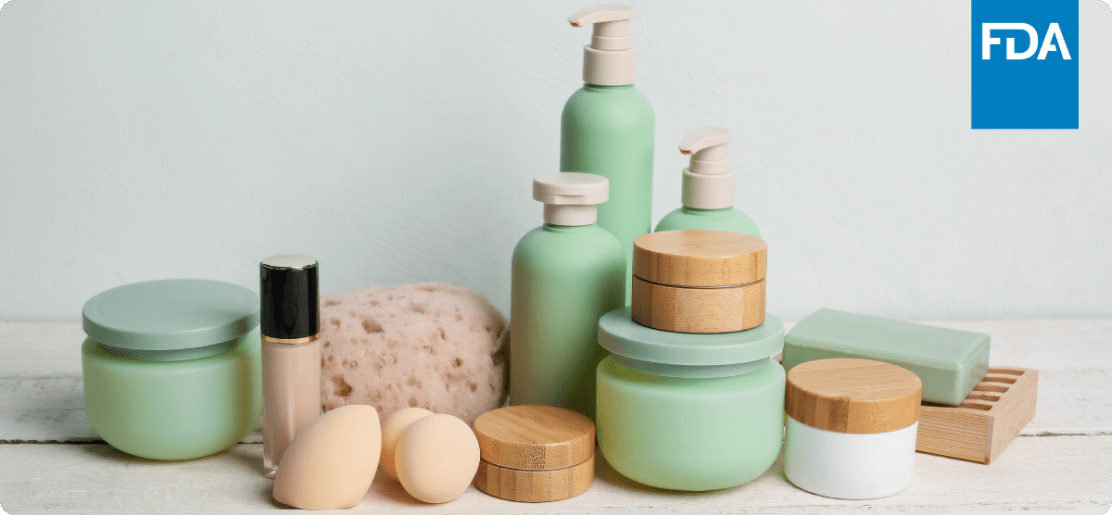
Ingredient safety is the foundation of cosmetic compliance in the United States. Every cosmetic product placed on the US market must be safe for its intended use, and the responsibility for ensuring this safety lies with the manufacturer and brand owner. Under the authority of the US FDA and strengthened by the Modernization of Cosmetics Regulation Act (MoCRA), cosmetic companies must maintain documented evidence that their ingredients and finished products are safe.
Unlike drugs, cosmetic ingredients do not generally require premarket approval. However, this does not mean cosmetic ingredients are unregulated. Instead, the US regulatory system places legal accountability on companies to ensure ingredient safety before products reach consumers.
XPRO America is a professional US FDA Consultancy supporting cosmetic brands with ingredient safety evaluations, formulation reviews, and MoCRA compliance.
How US FDA Approaches Cosmetic Ingredient Safety
The US FDA regulates cosmetics under the Federal Food, Drug, and Cosmetic Act and MoCRA. Under these laws:
- Cosmetics must not contain prohibited substances
- Restricted ingredients must meet specific conditions
- Products must not be adulterated or misbranded
- Adequate safety substantiation must be maintained
The US FDA can take enforcement action if a cosmetic contains unsafe ingredients or poses a health risk.
Manufacturer Responsibility for Ingredient Safety
In the US system, cosmetic companies are legally responsible for:
- Selecting safe ingredients
- Evaluating ingredient toxicology
- Assessing finished product safety
- Maintaining safety documentation
There is no pre-approval pathway for most cosmetic ingredients. Instead, companies must demonstrate safety through scientific evidence.
Prohibited Cosmetic Ingredients
The US FDA maintains a list of substances that are prohibited in cosmetic products.
Examples of prohibited substances include:
- Certain mercury compounds
- Chloroform
- Methylene chloride
- Vinyl chloride
Use of prohibited ingredients renders a cosmetic adulterated and illegal to sell in the United States.
XPRO America reviews formulations against prohibited ingredient lists.
Restricted Cosmetic Ingredients
Some cosmetic ingredients are allowed only under specific conditions, such as:
- Concentration limits
- Product type restrictions
- Usage warnings
- Specific formulation controls
Examples may include certain preservatives, hair dye substances, or fluoride compounds.
Failure to meet restriction conditions results in non-compliance.
Color Additives and US FDA Authorization
Color additives are treated differently from other cosmetic ingredients.
Key points:
- Color additives must be approved by the US FDA for intended use
- Some color additives require batch certification
- Approved usage conditions must be followed
Using an unapproved color additive makes a cosmetic adulterated.
XPRO America verifies color additive compliance.
Contaminants and Impurities
Cosmetic ingredients must not contain harmful contaminants at unsafe levels.
Common contaminant concerns include:
- Heavy metals
- Microbial contamination
- Residual solvents
Companies must implement controls and testing to ensure ingredient purity.
Safety Substantiation Requirement Under MoCRA
MoCRA requires companies to maintain adequate safety substantiation for each cosmetic product.
Safety substantiation must demonstrate that:
- Ingredients are safe at their intended concentrations
- Finished product is safe under normal use
Acceptable evidence may include:
- Toxicological risk assessments
- Ingredient safety data sheets
- Scientific literature
- Product testing
Safety documentation must be available for US FDA inspection.
Ingredient Listing Accuracy
Ingredient safety is closely tied to labeling and product listing.
Ingredient lists must:
- Use INCI names
- Appear in descending order of predominance
- Match formulation records
- Match cosmetic product listings
Inconsistent ingredient information raises regulatory red flags.
XPRO America reconciles labels, formulations, and listings.
US FDA Enforcement Related to Ingredient Safety
When ingredient safety issues arise, the US FDA may:
- Issue warning letters
- Request product recalls
- Mandate recalls under MoCRA
- Seize products
- Place companies on import alert
Strong ingredient safety programs reduce enforcement risk.
Import Considerations for Ingredient Safety
Imported cosmetics must meet the same ingredient safety standards as US-manufactured products.
US FDA may refuse entry if products:
- Contain prohibited ingredients
- Lack safety documentation
- Are misbranded
XPRO America supports import compliance reviews.
Best Practices for Cosmetic Ingredient Safety Compliance
- Conduct ingredient risk assessments
- Verify regulatory status of ingredients
- Maintain safety substantiation files
- Test raw materials and finished products
- Monitor regulatory updates
- Work with an experienced US FDA Consultancy
How XPRO America Supports Ingredient Safety Compliance
XPRO America operates as a trusted US FDA Consultancy providing:
- Ingredient compliance review
- Prohibited and restricted substance screening
- Color additive verification
- Safety substantiation preparation
- Label and product listing reconciliation
- Regulatory compliance consulting
For professional assistance, contact support@xproamerica.com.
Compliance Perspective
Cosmetic ingredient safety is not optional—it is a legal obligation under US FDA regulations and MoCRA. Companies that proactively evaluate and document ingredient safety build strong regulatory foundations and protect both consumers and their brands.
With expert guidance from XPRO America, cosmetic companies can confidently formulate, document, and market safe cosmetic products in the United States.
Leave a Reply