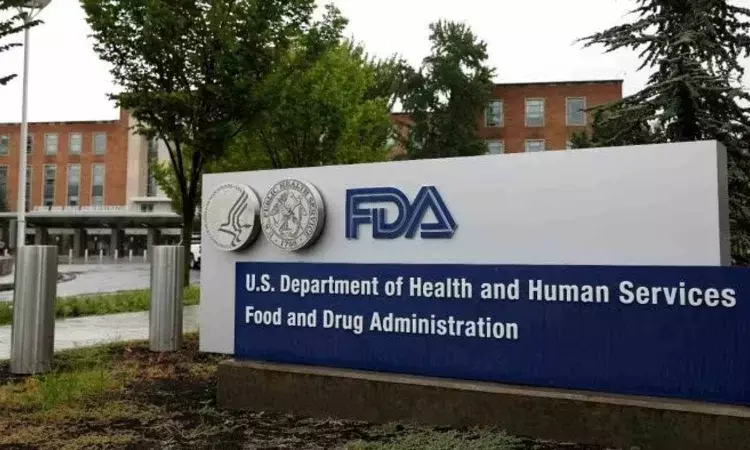
Companies that plan to market generic drug products in the United States must submit an Abbreviated New Drug Application (ANDA) to the U.S. Food and Drug Administration (FDA). The ANDA drug registration form is a core component of this submission and serves as the formal method for providing scientific, technical, and administrative information required for FDA review.
A properly prepared ANDA form and supporting dossier demonstrate that a generic drug is therapeutically equivalent to a previously approved reference listed drug (RLD) and meets all applicable regulatory standards.
Understanding the US FDA ANDA Drug Registration Form
The US FDA ANDA drug registration form does not exist as a single standalone paper document. Instead, it refers to a collection of electronic application forms and structured modules submitted through the FDA’s electronic Common Technical Document (eCTD) system.
Through this electronic submission, the applicant provides evidence that the generic drug:
- Contains the same active ingredient as the RLD
- Has the same dosage form, strength, and route of administration
- Is bioequivalent to the RLD
- Uses labeling that is substantially the same
- Is manufactured under compliant conditions
These elements allow the FDA to determine whether the generic drug can be approved for commercial distribution.
Why the ANDA Form Is Mandatory
The ANDA drug registration form enables the FDA to confirm that a generic product will perform in the same manner as the approved brand-name drug. The FDA uses this information to ensure that generic drugs:
- Are safe and effective
- Meet the same quality and purity standards
- Are therapeutically equivalent and interchangeable
Without a complete ANDA form and supporting data, a generic drug cannot be legally marketed in the United States.
Who Must Submit an ANDA Drug Registration Form
The ANDA form must be submitted by:
- Generic drug manufacturers
- Contract manufacturing organizations (CMOs)
- Foreign pharmaceutical companies exporting generics to the US
- Companies seeking to commercialize copies of approved brand drugs
In addition to ANDA approval, applicants must also complete drug establishment registration and drug product listing with the FDA.
Structure of the ANDA Application
The ANDA drug registration form is organized into standardized technical modules:
Module 1 – Administrative Information
Applicant details, FDA forms, labeling, and patent certifications.
Module 2 – Summaries
Overall quality summary and bioequivalence summary.
Module 3 – Quality (CMC)
Drug substance and drug product data, manufacturing processes, specifications, and controls.
Module 4 – Nonclinical Reports (if applicable)
Module 5 – Clinical / Bioequivalence Reports
Each module must be technically accurate and internally consistent.
Bioequivalence Information in the ANDA Form
Bioequivalence studies are the foundation of ANDA approval. These studies show that the generic drug releases the active ingredient into the body at the same rate and extent as the RLD.
The FDA evaluates pharmacokinetic parameters such as:
- Cmax (maximum concentration)
- AUC (area under the curve)
Successful bioequivalence results are essential for approval.
Manufacturing Facility Details
The ANDA form must identify all facilities involved in manufacturing, testing, packaging, and labeling. These facilities must:
- Be registered with the FDA
- Comply with current Good Manufacturing Practices (cGMP)
The FDA may inspect facilities to verify compliance. Deficiencies can delay or prevent ANDA approval.
Common ANDA Form Submission Issues
Applicants frequently encounter:
- Incomplete CMC documentation
- Bioequivalence study deficiencies
- Labeling inconsistencies
- Incorrect facility information
- Missing patent certifications
Such issues often result in a Complete Response Letter (CRL) and extended review timelines.
Why Professional ANDA Form Support Is Important
Preparing the US FDA ANDA drug registration form requires regulatory expertise, scientific understanding, and technical precision. Even small errors can lead to costly delays or rejection.
XPRO America, a US FDA Consultancy, provides comprehensive ANDA support services, including form preparation, dossier compilation, gap analysis, eCTD publishing, FDA correspondence handling, and post-approval compliance assistance.
Organizations seeking professional guidance for US FDA ANDA drug registration forms can contact support@xproamerica.com.
Conclusion
The US FDA ANDA drug registration form is the foundation of generic drug approval in the United States. While the ANDA pathway avoids extensive clinical trials, it demands high-quality documentation, accurate electronic submission, and strict regulatory compliance.
By working with an experienced US FDA Consultancy and ensuring a well-prepared ANDA submission, generic drug manufacturers can improve approval success, reduce regulatory risk, and achieve faster access to the US market.
Leave a Reply